
Guide
Taking a Car to College: Insurance Changes
What changes when a student takes a car to school—garaging address, territory, campus parking risk, comprehensive coverage, and who else may drive it.

By Andre Washington · Staff Writer
Published · Updated
Answer in brief
When a car goes to college, the insurer needs the campus garaging address, because territory rating follows where the car is kept overnight. Rates may rise (urban campus, high theft) or fall (small college town). Comprehensive matters more on campus—theft, vandalism and parking-lot damage are common claims. Letting roommates drive the car is permissive use, covered by your policy but with your deductible and your record at stake. Failing to update the address is misrepresentation and can affect a claim.
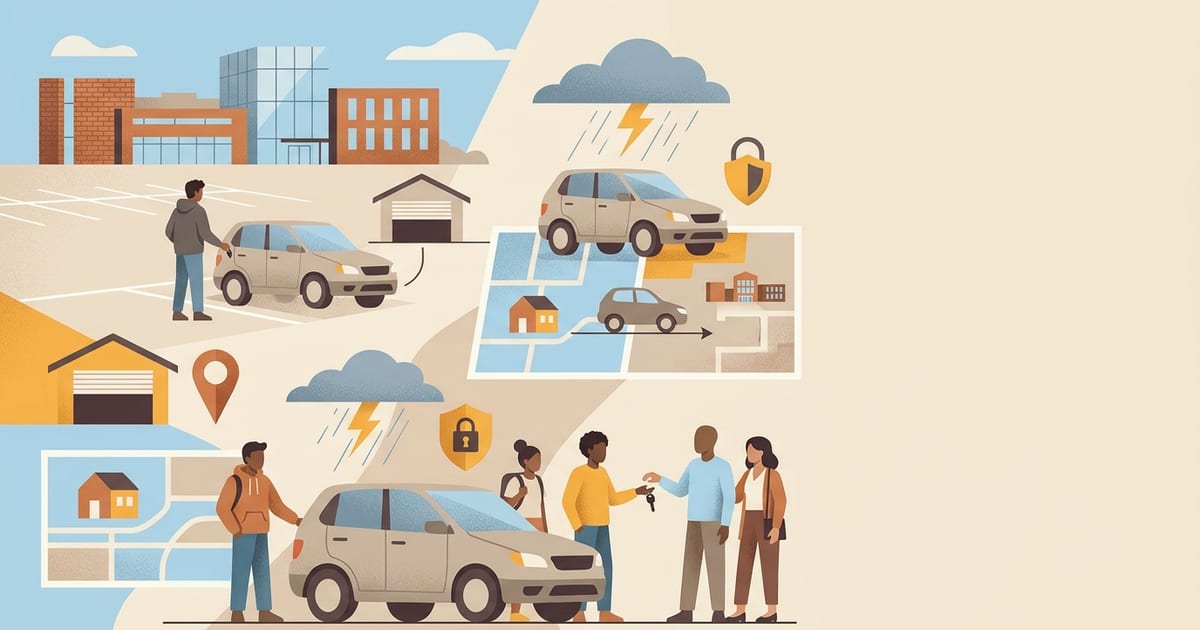
Update the garaging address
The address where the car is kept most of the year sets the territory. A car at a large urban campus is often rated higher than at the family home; a car in a small college town may be lower. Either way, the insurer must know—an inaccurate garaging address is a common reason for claim disputes.
Campus-specific risks
- Theft and break-ins in student lots and street parking.
- Vandalism and hit-and-run parking damage.
- Weather—hail belts, flooding, falling branches.
- Catalytic converter theft on some models.
All of these are comprehensive claims. Keep comprehensive on a car at college even if you drop collision.
Roommates and friends
Occasional permissive use is covered. Regular use by a roommate is not—they should be listed or carry their own non-owner coverage. If a friend crashes your car, your collision pays, your deductible applies and the claim goes on your record.
Quote finder
Find auto insurance quotes that fit your situation
Parking and alternatives
Campus parking permits can cost hundreds; combined with the premium increase, many students find leaving the car at home and claiming the distant student discount is the better financial choice.
Questions & answers
Do I have to change my address on my insurance for college?
The garaging address, yes, if the car is kept at school most of the year.
Will taking my car to college raise my insurance?
It depends on the campus territory—urban campuses usually raise it, small towns may lower it.
Can my roommate drive my car?
Occasionally, yes under permissive use. Regularly, they should be listed.
Terms used in this guide
- Garaging address
- Where the car is kept overnight most of the year; sets the rating territory. Must be the campus address if the car is at school.
- Rating territory
- A geographic area with its own base rates. Urban campuses are often higher than suburban homes.
- Permissive use
- Coverage for an unlisted driver using a car with the owner's permission. The owner's policy is primary.
- Comprehensive coverage
- Theft, vandalism, weather, fire, animal strikes, glass—the common campus claims.
Sources and references
Legal figures on this page (minimum limits, filing periods, statutory benefits) are checked against the primary law or the state insurance regulator listed below. Links and figures last verified Nov 2026.
- Teenagers — Insurance Institute for Highway SafetyIndependent researchTeen crash risk, graduated driver licensing research and vehicle recommendations for young drivers.
- Insurance losses by make and model — Highway Loss Data InstituteStatistical dataRelative claim frequency and severity by vehicle under collision, property damage, comprehensive, PIP, MedPay and bodily injury coverages.
- Estimated percentage of uninsured motorists by state, 2017–2023 — Insurance Information Institute (2025)Statistical dataIRC time series by state; 2023: Mississippi 28.2%, New Mexico 24.1%, D.C. 23.1%, Michigan 22.3%, Florida 20.6%, California 20.4%, Texas 14.5%; lowest Maine 5.7%.
- Fatality facts: State by state — Insurance Institute for Highway SafetyStatistical dataCrash deaths and death rates per 100,000 population and per 100 million miles by state.
- What is covered by a basic auto insurance policy? — Insurance Information InstituteConsumer guidanceDefines bodily injury and property damage liability, MedPay, PIP, uninsured/underinsured motorist, collision, comprehensive and glass coverage.
- Nine ways to lower your auto insurance costs — Insurance Information InstituteConsumer guidanceShop at least three quotes; raising a deductible from $200 to $500 can cut collision/comprehensive cost 15–30%, $1,000 can save 40%+; drop physical damage on cars worth under 10× the premium; bundling, low-mileage and good-student discounts.
- Auto insurance for teen drivers — Insurance Information InstituteConsumer guidanceAdding a teen to a parent's policy versus a separate policy; good-student and driver-training discounts; vehicle choice.
- What determines the price of an auto insurance policy? — Insurance Information InstituteConsumer guidanceRating factors: driving record, mileage, location, age, gender, vehicle, credit-based insurance score, coverage choices. Notes ZIP-code rating is prohibited in California and Michigan and gender rating is prohibited in seven states.
Practical guidance on this page is original editorial work. Cited sources support factual statements and do not endorse this site. Dollar ranges described as typical or illustrative are editorial estimates, not figures from these sources.
Guide
Staying on Your Parents' Car Insurance in College
The rules for remaining on a family policy as a college student—permanent address, car ownership, distance—and why it is usually the cheapest option.
Guide
Car Insurance for Out-of-State College Students
How insurance works when a student attends college in another state—keeping the home policy, coverage minimums, registration questions, and when a separate policy is needed.
Guide
What Coverage a College Student Needs
Liability, uninsured motorist, collision and comprehensive, and deductibles for a student's car—on a family policy or alone.