
Guide
Car Insurance for College Students Without a Car
Whether a student without a car needs insurance—driving friends' cars, rentals, car-sharing, non-owner policies—and how to keep coverage history continuous.

By Andre Washington · Staff Writer
Published · Updated
Answer in brief
A college student without a car usually needs no separate policy: staying listed on a parent's policy (with the distant student discount) keeps them covered driving family cars and gives coverage history, and permissive use covers them in friends' cars under the owner's policy. A non-owner policy makes sense only for a student who is not on any family policy, drives borrowed cars regularly, or wants to maintain continuous coverage. Car-sharing services and rentals carry their own coverage with gaps worth understanding.
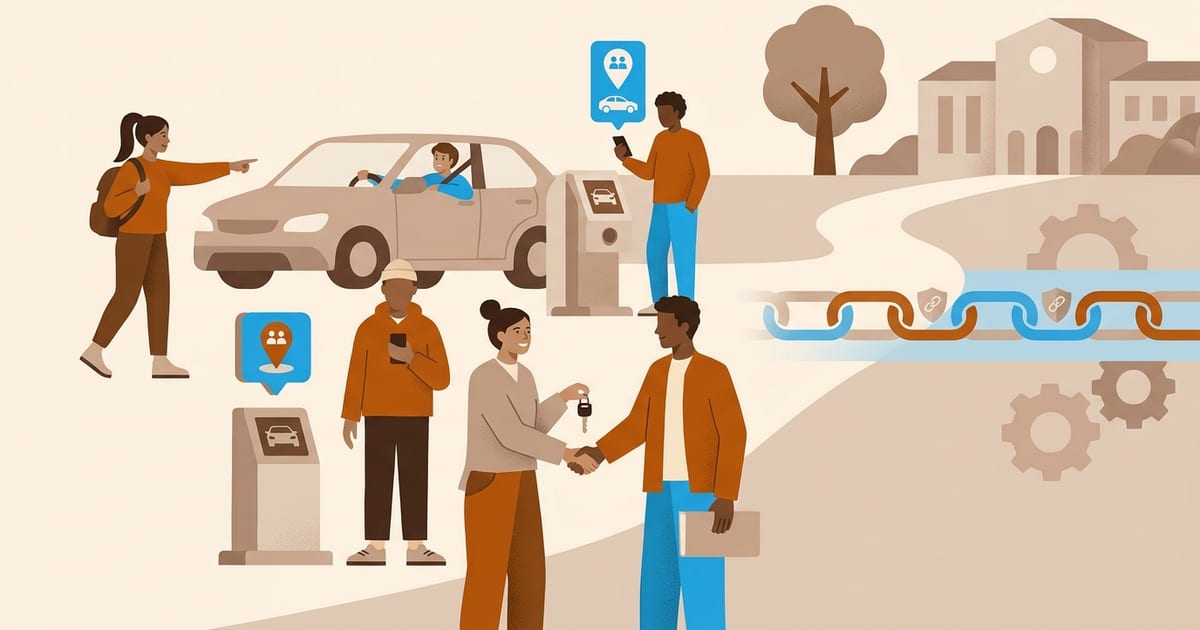
Driving a friend's car
The car owner's policy is primary for a permissive driver. If you crash, their insurance pays (and their rate suffers). Your own liability coverage—from a parent's policy or a non-owner policy—may apply in excess if damages exceed the owner's limits.
Car-sharing and rentals
Hourly car-sharing services include liability at or near state minimums and a damage fee or deductible. Rental companies sell waivers. A parent's policy with collision often extends to rentals; some credit cards add coverage. Know what applies before you drive.
When a non-owner policy fits
| Situation | Non-owner policy? |
|---|---|
| On a parent's policy, no car | No—already covered and building history |
| Not on any policy, borrow cars often | Yes—liability protection and continuous coverage |
| Independent student, will buy a car after graduation | Yes—avoids the no-prior-insurance surcharge later |
| Occasional car-share or rental only | Usually no |
Quote finder
Find auto insurance quotes that fit your situation
Why coverage history matters
Insurers rate a gap in coverage as a risk factor. A student who leaves a parent's policy and goes two years without any insurance will pay a no-prior-insurance surcharge when buying a first car. A cheap non-owner policy prevents that.
Entries in this guide
Specific questions answered in more depth.
Questions & answers
Do I need car insurance if I don't have a car in college?
Not usually, if you are listed on a parent's policy. If you are not, a non-owner policy protects you and keeps history continuous.
Am I covered driving a friend's car?
Under their policy as a permissive driver, yes. Your own policy may add excess liability coverage.
What is a non-owner policy?
Liability coverage for a driver without a car, typically $300–$700 a year for a young adult.
Terms used in this guide
- Non-owner policy
- Liability coverage for a driver without a car. Useful for independent students who borrow cars or want continuous history.
- Permissive use
- Coverage for an unlisted driver using a car with the owner's permission. The owner's policy is primary.
- Continuous coverage
- An unbroken insurance history. Gaps are rated as a risk factor.
Sources and references
Legal figures on this page (minimum limits, filing periods, statutory benefits) are checked against the primary law or the state insurance regulator listed below. Links and figures last verified Nov 2026.
- 37 TAC § 25.5 — enforcement of failure to maintain financial responsibility — Texas Administrative Code (via Cornell LII), 37 Tex. Admin. Code § 25.5Primary lawAn SR-22 filed as compliance must be maintained for two years from the most recent qualifying conviction; a lapse re-suspends driving privileges until a new certificate is filed.
- Teenagers — Insurance Institute for Highway SafetyIndependent researchTeen crash risk, graduated driver licensing research and vehicle recommendations for young drivers.
- What is covered by a basic auto insurance policy? — Insurance Information InstituteConsumer guidanceDefines bodily injury and property damage liability, MedPay, PIP, uninsured/underinsured motorist, collision, comprehensive and glass coverage.
- Nine ways to lower your auto insurance costs — Insurance Information InstituteConsumer guidanceShop at least three quotes; raising a deductible from $200 to $500 can cut collision/comprehensive cost 15–30%, $1,000 can save 40%+; drop physical damage on cars worth under 10× the premium; bundling, low-mileage and good-student discounts.
- Auto insurance for teen drivers — Insurance Information InstituteConsumer guidanceAdding a teen to a parent's policy versus a separate policy; good-student and driver-training discounts; vehicle choice.
- What if I can't find auto coverage? — Insurance Information InstituteConsumer guidanceHow the non-standard market and state assigned-risk plans insure drivers the voluntary market declines.
Practical guidance on this page is original editorial work. Cited sources support factual statements and do not endorse this site. Dollar ranges described as typical or illustrative are editorial estimates, not figures from these sources.
Guide
The Distant Student Discount
How the distant student (student away at school) discount works: the 100-mile rule, no-car requirement, typical savings, and how to claim it.
Guide
Staying on Your Parents' Car Insurance in College
The rules for remaining on a family policy as a college student—permanent address, car ownership, distance—and why it is usually the cheapest option.
Guide
What Coverage a College Student Needs
Liability, uninsured motorist, collision and comprehensive, and deductibles for a student's car—on a family policy or alone.