
Entry in Car Insurance for College Students Without a Car
Non-Owner Car Insurance for College Students: When You Need It
Learn when college students without a car need non-owner car insurance to protect against liability, prevent coverage gaps, and cover borrowed vehicles.

By Andre Washington · Staff Writer
Published
Answer in brief
Non-owner car insurance provides secondary liability protection for college students who regularly drive borrowed or rented vehicles but do not own a car. It covers bodily injury and property damage you cause to others, while preserving continuous coverage history so future premiums remain lower. Students who live away from home without a car often rely on this coverage when parents remove them from the family auto policy.
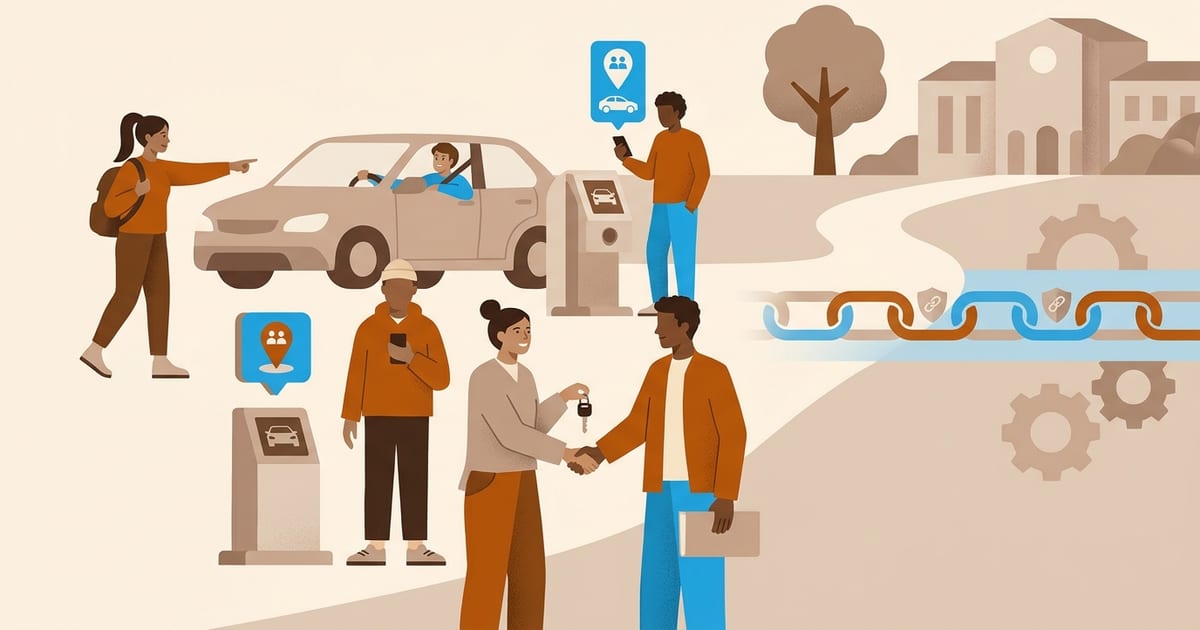
Many students leave their personal vehicles behind when heading to campus, while others do not own a vehicle at all. However, moving to college without a car does not completely eliminate your exposure to driving risks. Whether you occasionally borrow a roommate's car, rent a vehicle for a weekend road trip, or drive during summer employment, operating any vehicle exposes you to financial liability if a crash occurs.
For students in this situation, a non-owner policy provides personal liability protection without the expense of insuring a physical vehicle. Understanding how this policy works—and when it is necessary—helps students and parents avoid dangerous coverage lapses and unmanageable liability claims.
What Non-Owner Car Insurance Covers
A non-owner auto insurance policy is tied to an individual driver rather than a specific vehicle identification number. According to the Insurance Information Institute, basic auto insurance revolves around bodily injury liability and property damage liability. On a non-owner policy, these liability coverages protect you if you cause damage or injuries while operating a vehicle owned by someone else.
Non-owner policies operate as secondary coverage. When you drive a borrowed vehicle with permission, the car owner's primary insurance pays first in an accident under standard permissive use provisions. If the crash causes serious injuries or major property destruction that exceeds the car owner's liability limits, your non-owner policy kicks in to cover the remaining balance up to your personal policy limit.
Why Continuous Coverage Matters for Young Drivers
One of the most overlooked advantages of maintaining an insurance policy while at school is building continuous coverage. Insurance underwriters assess risk partly based on your past insurance history. Drivers who allow their insurance to lapse—even when they do not own a car—are frequently classified as higher-risk applicants when they eventually purchase a vehicle.
Data from the Insurance Information Institute indicates that drivers aged 16 to 20 had a fatal-crash involvement rate of 42.40 per 100,000 licensed drivers in 2023, while drivers aged 21 to 24 experienced a rate of 35.34. Because young drivers already face elevated base rates due to crash risk, avoiding an insurance lapse is essential. A non-owner policy keeps you continuously insured on paper, preventing non-standard rate surcharges after graduation.
When a College Student Needs a Non-Owner Policy
Not every student without a vehicle needs an individual non-owner contract. If you still live at home or return frequently during breaks, staying on your parents' car insurance as an occasional driver is often the simplest and most cost-effective path. However, specific campus scenarios make a non-owner policy the ideal choice:
- Your parents have removed you from their family auto policy to save money while you live on campus.
- You frequently borrow cars belonging to friends, roommates, or extended family members outside your home household.
- You regularly rent cars for school trips, internships, or personal travel and want personal liability coverage without purchasing costly counter insurance.
- You need to satisfy a mandatory financial responsibility filing following a moving violation or prior license suspension.
How to Put a Non-Owner Policy in Place
- 1
Verify your family policy status
Speak with your parents to confirm whether you are still listed on their auto insurance policy. If your permanent address remains their home, you might already have coverage.
- 2
Determine your driving frequency
Estimate how often you borrow vehicles or rent cars during the school term. If you never drive under any circumstance, you might review other no-car insurance options.
- 3
Select your liability limits
Choose liability limits that exceed bare state minimums. Modest increases in liability limits usually cost very little on non-owner policies and offer vital financial shelter.
- 4
Gather quotes from multiple insurers
Non-owner insurance is not sold online by every company. Work with an independent quote tool or agent to evaluate rates from carriers that write standalone non-owner lines.
Cost Expectations for College Students
Because non-owner policies carry no comprehensive or collision protection and cover lower total mileage, their cost is significantly lower than standard car insurance. The National Association of Insurance Commissioners reported an overall countrywide average auto insurance expenditure of $1,281 in 2023. A college student's non-owner policy typically costs an illustrative range of $350 to $700 per year, depending on state rating rules, driving history, and chosen limits.
Consumer pricing research from United Policyholders highlights that maintaining steady coverage saves money over multi-year horizons. If you plan to purchase a vehicle after finishing your degree, paying for a modest non-owner policy during your junior and senior years can yield lower initial premiums on your first solo policy.
Questions & answers
Can I buy a non-owner policy if I own a registered vehicle?
No. Non-owner policies are strictly reserved for drivers who do not own an operational vehicle. If a vehicle is registered in your name, insurers require a traditional auto insurance policy with owner liability.
Does non-owner insurance cover damage to the car I borrow?
No. Non-owner car insurance only pays for bodily injury and property damage inflicted on third parties. Damage to the car you are driving must be handled by the vehicle owner's collision coverage or out of pocket.
Will a non-owner policy satisfy state financial responsibility laws?
Yes. Every state requires drivers to demonstrate financial responsibility when driving, and an active non-owner liability policy fulfills that legal mandate as long as limits meet or exceed statutory floors.
Can I use non-owner insurance for rideshare driving or delivery work?
No. Non-owner insurance policies exclude commercial driving, delivery services, and rideshare employment. You must carry specialized commercial or business-use policies for commercial operations.
Terms: Non-owner policy, Continuous coverage, Permissive use, Occasional driver, Liability limits
Sources and references
Legal figures on this page (minimum limits, filing periods, statutory benefits) are checked against the primary law or the state insurance regulator listed below. Links and figures last verified Nov 2026.
- Drivers in fatal motor vehicle crashes by age, 2023 — Insurance Information Institute (2025)Statistical dataFatal-crash involvement per 100,000 licensed drivers: 42.40 (16–20), 35.34 (21–24), 28.97 (25–34), 24.18 (35–44), 21.70 (45–54), 19.45 (55–64), 15.44 (65–74), 16.63 (75+).
- 2019–2023 Auto Insurance Database: average premium supplement — National Association of Insurance Commissioners (2025)Statistical dataCountrywide average expenditure $1,281 in 2023 (+13.98%); combined average premium $1,438; state tables for liability, collision and comprehensive.
- What is covered by a basic auto insurance policy? — Insurance Information InstituteConsumer guidanceDefines bodily injury and property damage liability, MedPay, PIP, uninsured/underinsured motorist, collision, comprehensive and glass coverage.
- What determines the price of an auto insurance policy? — Insurance Information InstituteConsumer guidanceRating factors: driving record, mileage, location, age, gender, vehicle, credit-based insurance score, coverage choices. Notes ZIP-code rating is prohibited in California and Michigan and gender rating is prohibited in seven states.
- Is it legal to drive without insurance? — Insurance Information InstituteConsumer guidanceEvery state requires drivers to demonstrate financial responsibility; in most states insurance is the mandatory way to do so.
- Auto insurance basics — United PolicyholdersConsumer guidancePlain-language coverage explanations from a policyholder-advocacy non-profit.
- Auto insurance for teen drivers — Insurance Information InstituteConsumer guidanceAdding a teen to a parent's policy versus a separate policy; good-student and driver-training discounts; vehicle choice.
- Nine ways to lower your auto insurance costs — Insurance Information InstituteConsumer guidanceShop at least three quotes; raising a deductible from $200 to $500 can cut collision/comprehensive cost 15–30%, $1,000 can save 40%+; drop physical damage on cars worth under 10× the premium; bundling, low-mileage and good-student discounts.
Practical guidance on this page is original editorial work. Cited sources support factual statements and do not endorse this site. Dollar ranges described as typical or illustrative are editorial estimates, not figures from these sources.